

Time: 2026-10-23 Views:
Queue length is not a staffing problem — it is a device problem. The SP35 personal shopper device puts navigation, scanning and payment in one handheld unit, so shoppers can complete routine purchases without waiting for a free cashier.
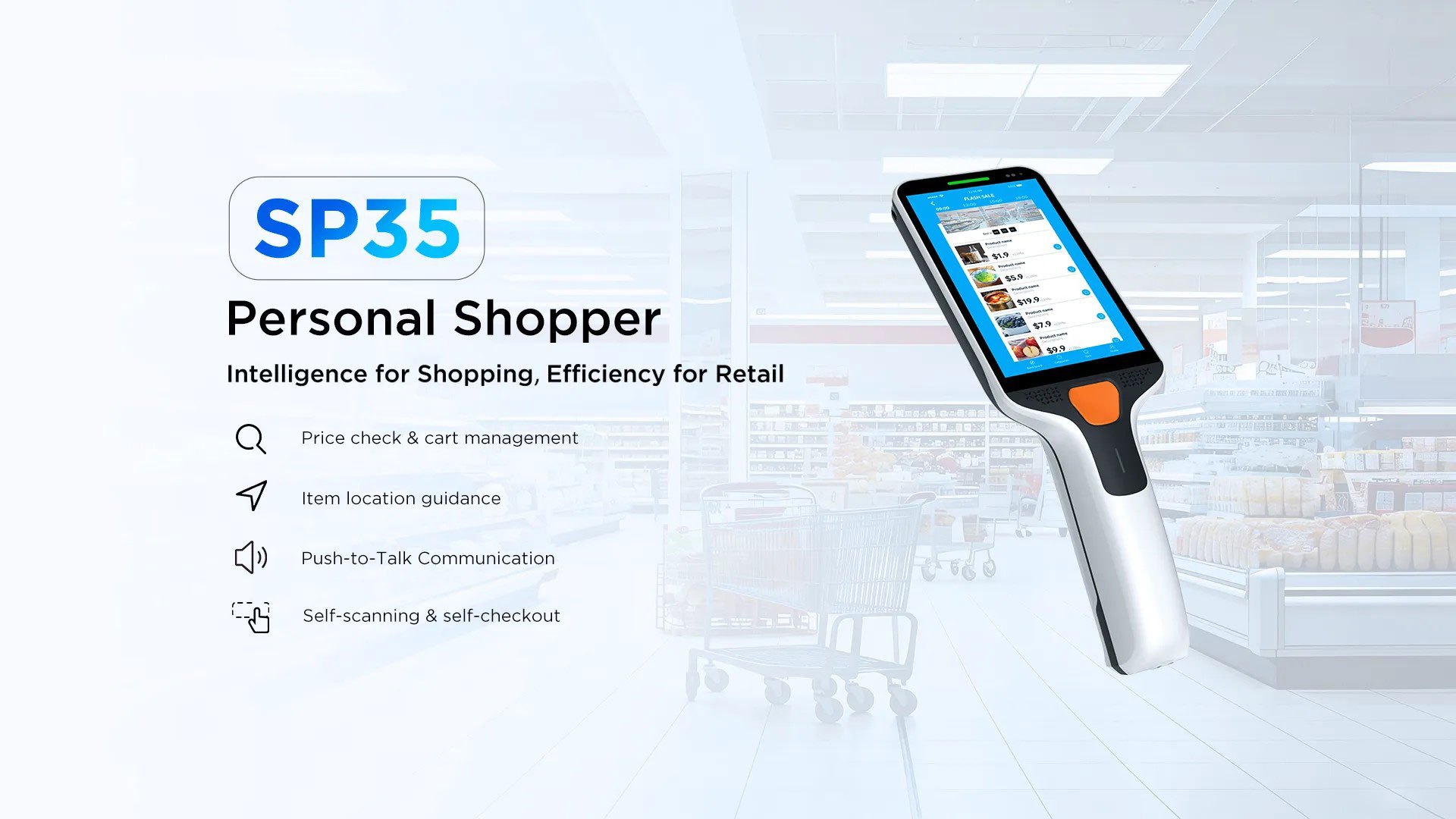
Long queues at peak hours cost retailers in two ways at once: shoppers who abandon full carts, and store staff pulled away from higher-value service to clear checkout bottlenecks. The SP35 Personal Shopper, launched in September 2026, is a purpose-built personal shopper device that combines in-store navigation, barcode scanning and tap-to-pay payment in a single handheld unit, so a shopper can move from the shelf to a completed payment without ever joining a queue.
First shown at NRF 2026: Retail's Big Show Europe in Paris, the SP35 is designed around a simple observation: self-service is moving beyond fixed kiosks and becoming part of the broader shopping journey. One device covers the three moments where shoppers traditionally need a staff member — finding a product, confirming what it is, and paying for it.
Octa-core 2.9 GHz processor with Android 15, upgradable to Android 20. Retail application roadmaps are long, and devices that cannot follow the OS roadmap become security liabilities. An upgrade path this long protects the fleet investment across multiple refresh cycles.
Wi-Fi 6E (2x2 MU-MIMO) and Bluetooth 5.3. Crowded stores are hostile radio environments. Wi-Fi 6E opens the 6 GHz band, keeping real-time price lookups, inventory data and payment authorization responsive even when hundreds of devices share the same floor space.
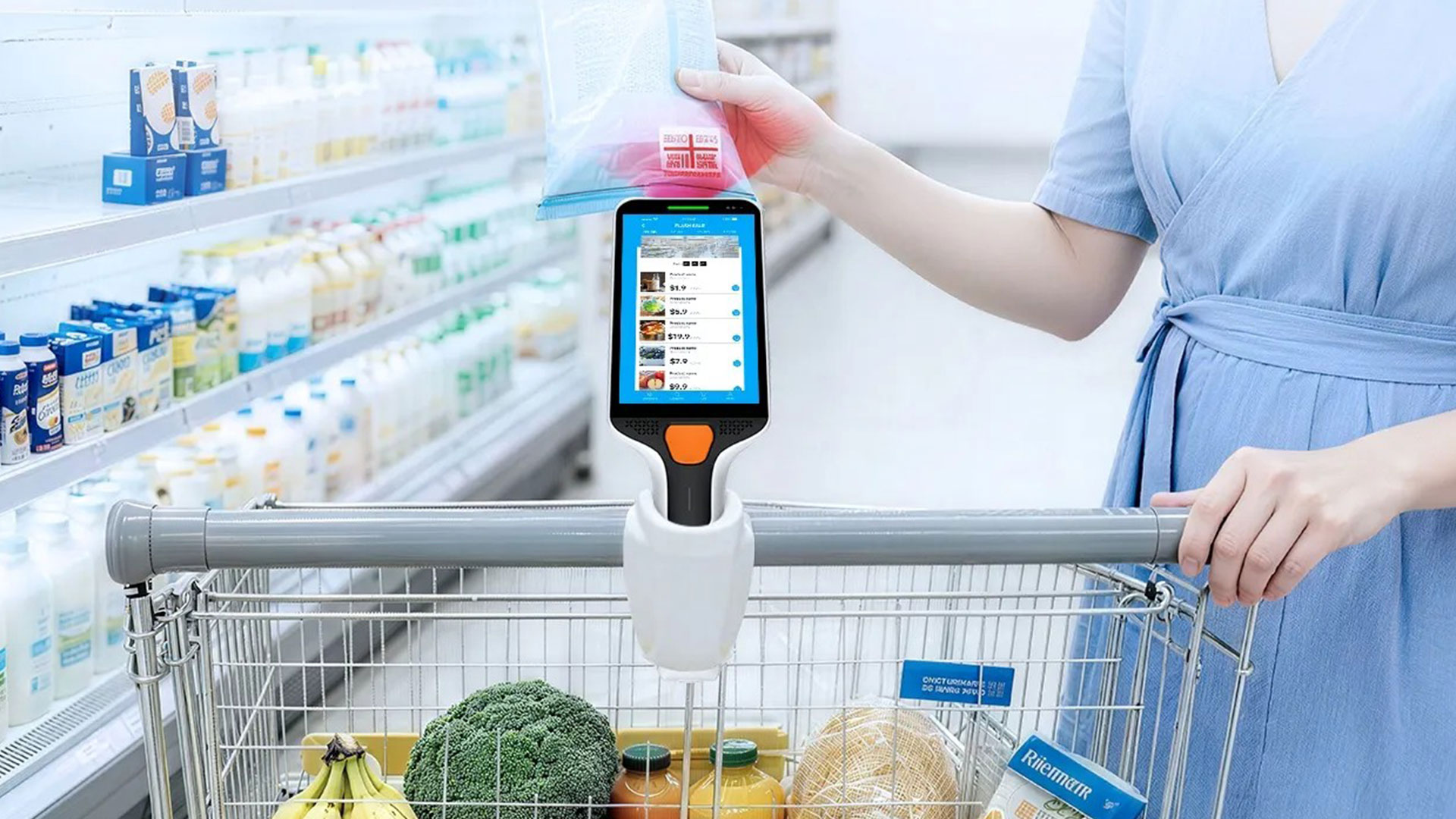
Professional 1D/2D scan engine with auto-scan mode, plus a 16MP autofocus camera. The scan engine captures barcodes instantly, while auto-scan mode lets shoppers capture items without pressing a button — the difference between a smooth scan-as-you-shop experience and one shoppers give up on. The 16MP PDAF camera handles product recognition and image capture tasks a scanner alone cannot.
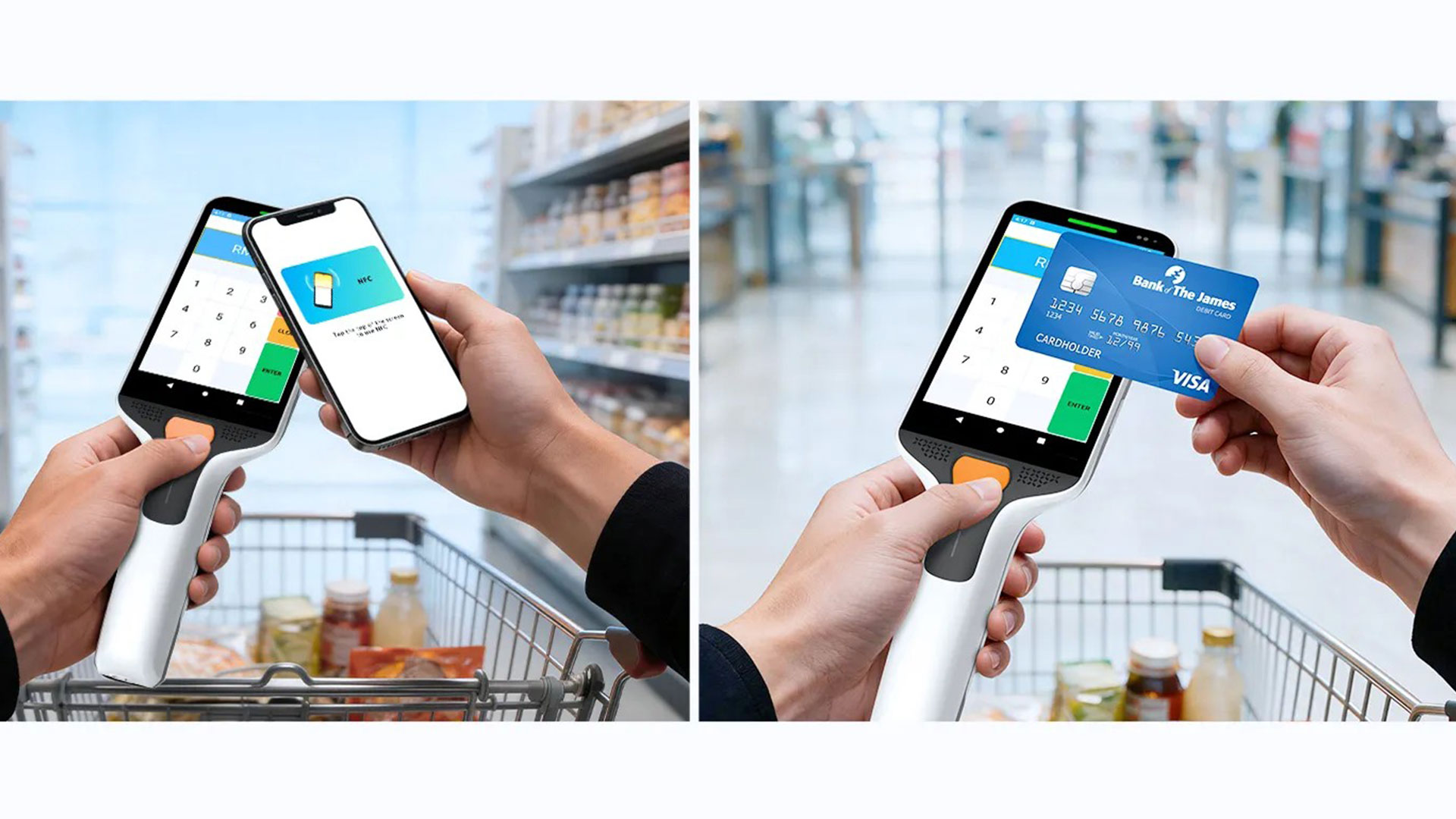
Built-in NFC and SoftPOS. Membership recognition and contactless payment happen directly on the device — tap the member card to unlock the shopper, tap the bank card to pay. No additional payment hardware is required at the point of transaction.
Optional UWB positioning with centimeter-level accuracy. UWB guides shoppers to the aisle and shelf where an item sits, and supports device tracking for up to 48 hours even after the device is powered off — a practical loss-prevention capability, not just a navigation feature.
IP65 protection, 1.5 m drop resistance, and a -10°C to +50°C operating range. A personal shopper device lives in shopping carts, on concrete floors and in refrigerated aisles. This rating set means the fleet survives daily shop-floor handling rather than failing in its first year.
4900 mAh user-replaceable battery and a 302 g lightweight body. A full shift on one charge, with hot-swappable batteries for stores that run longer hours — at a weight shoppers can carry comfortably for an entire trip.
Scan-as-you-shop. A shopper picks up a device at the entrance, taps a membership card to unlock it, and scans items into their digital basket as they walk the aisles. At the end, they pay directly on the device and walk out — no queue, no cashier intervention.
Find the product, not just the price. With optional UWB positioning, the device guides the shopper to the exact location of an item. Staff answer fewer "where is this?" questions and spend that time on service that actually needs a person.
Call for assistance without hunting for staff. When a shopper presses the assist button, staff can locate the device and come over directly — help arrives where the shopper is standing, not where a service desk happens to be.
The optional locking three-slot charging cradle addresses the operational side of a self-shopping fleet: devices dock automatically, charge securely, and lock in place between shifts. Combined with UWB tracking after power-off, retailers keep visibility over the fleet even when individual devices leave authorized areas — which directly reduces shrinkage of the devices themselves.
The SP35 extends self-service to wherever the shopper is standing, while complementary fixed devices — such as shelf-side price checkers — cover the remaining touchpoints along the journey. Retailers handle routine product, pricing and payment interactions with less staff intervention, and store teams focus on the service moments that build loyalty.
If you are evaluating a personal shopper device for your stores, talk to our team about your peak-hour traffic and store layout — and see how scan, find and pay in one device changes the checkout equation.
Tell us about your store layout and peak-hour traffic, and our team will map how a personal shopper device fits your operation.
Talk to our team +86-13827760889
 info@wepoy.com


Our Products

Industries
About Us


 Spanish